


By the Man of the Hour Editorial Team
Where to begin
A first mechanical dive watch has to do two jobs. It needs the clear dial, sturdy construction and water resistance that define the category, but it also needs to make sense on ordinary days when the deepest water in sight is a swimming pool. That is why the best starting point is rarely the watch with the longest specification sheet. Size, price and character matter just as much.
The four watches here cover a useful spread. Two are compact 40 mm options, one adds a GMT function and a more premium finish, and one embraces the large, practical shape many people picture when they hear the words “diver’s watch”. All four are identified by exact reference, so the watch shown is the watch being discussed.
What matters in a first dive watch
Start with the case. A difference of four or five millimetres can change the experience more than a small movement upgrade. The 40 mm Seiko and Tissot will be the easier place to begin for many wrists. The 41 mm Longines remains moderate, while the 45 mm Seiko SRPE93 makes its size part of the appeal. Buyers who enjoy a substantial watch may prefer it; those who want something quieter should look elsewhere.
Power reserve is worth considering, although it should not decide the purchase alone. A reserve of roughly three days lets a watch come off the wrist for a weekend and still be running when it is picked up again. Water resistance also needs context. Every watch in this guide offers at least 200 metres, which is already serious capability. The more useful question is whether the whole package—case, strap or bracelet, price and appearance—fits the way the watch will actually be worn.
At the time of writing, the prices below were snapshots from official regional sites. They can change, and a US price should not be treated as a direct comparison with a UK price after tax and currency differences. The figures are here to establish the broad position of each watch, not to pretend that every reader will see the same checkout total.
Seiko Prospex 1965 Heritage Diver SPB453J1
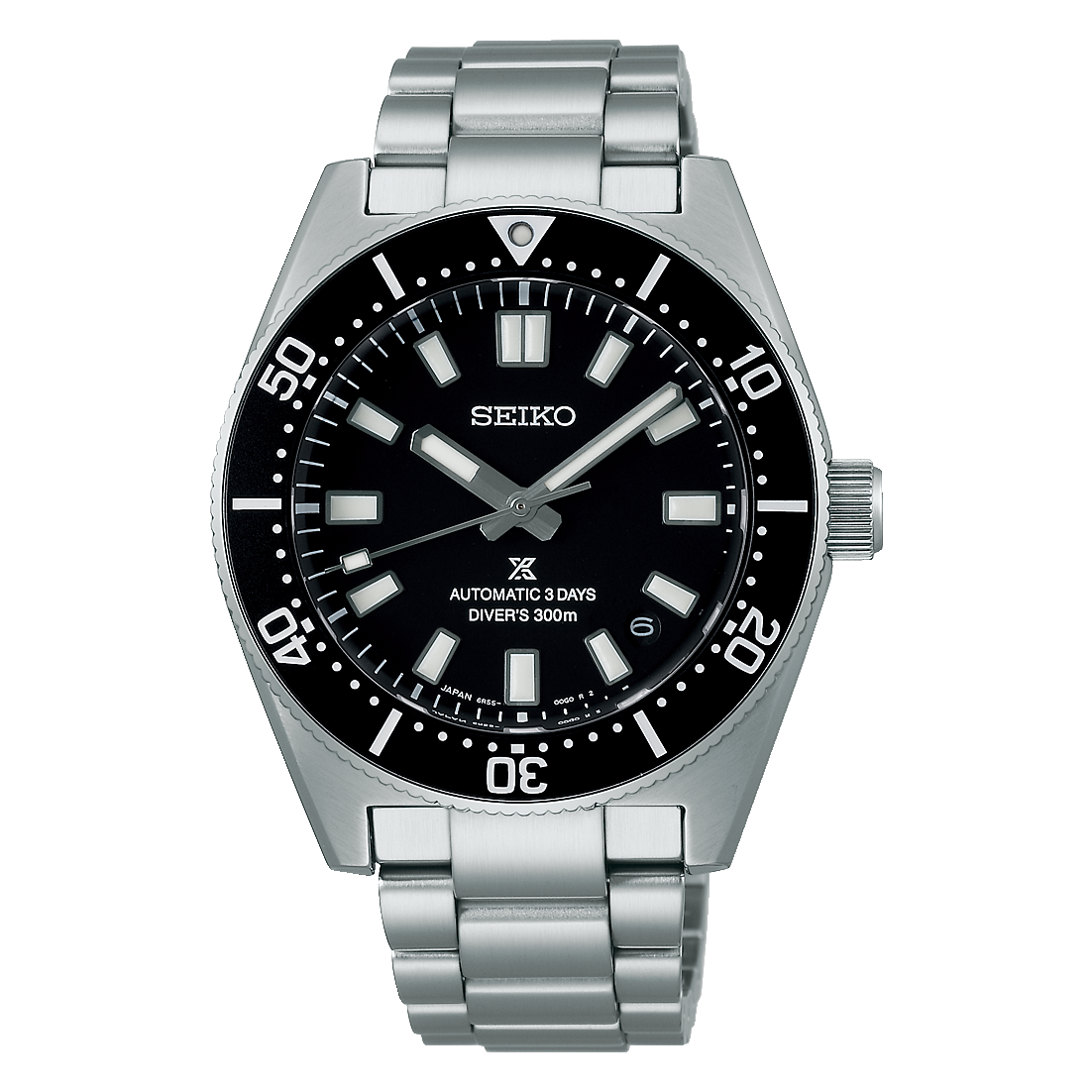
The SPB453J1 is the heritage-led choice in this group. Its black dial, 40 mm case and 13 mm thickness give it proportions that should feel familiar rather than oversized. Seiko pairs that compact shape with 300 metres of water resistance, so the watch does not trade away capability in pursuit of a more manageable footprint.
Inside is the calibre 6R55 with a stated 72-hour power reserve. That three-day span is convenient if the watch shares time with others, but the stronger reason to consider the SPB453J1 is its balance. It offers the visual language of a traditional Seiko diver without the 45 mm presence of the SRPE93.
The official UK price recorded for this reference was £1,200. That puts it well above the Tissot and the larger Seiko in this selection. The extra spend is easiest to justify for someone who specifically wants the compact proportions and heritage-led Seiko design. If those qualities are secondary, the less expensive watches make a strong argument.
Tissot Seastar 1000 T120.807.11.051.00
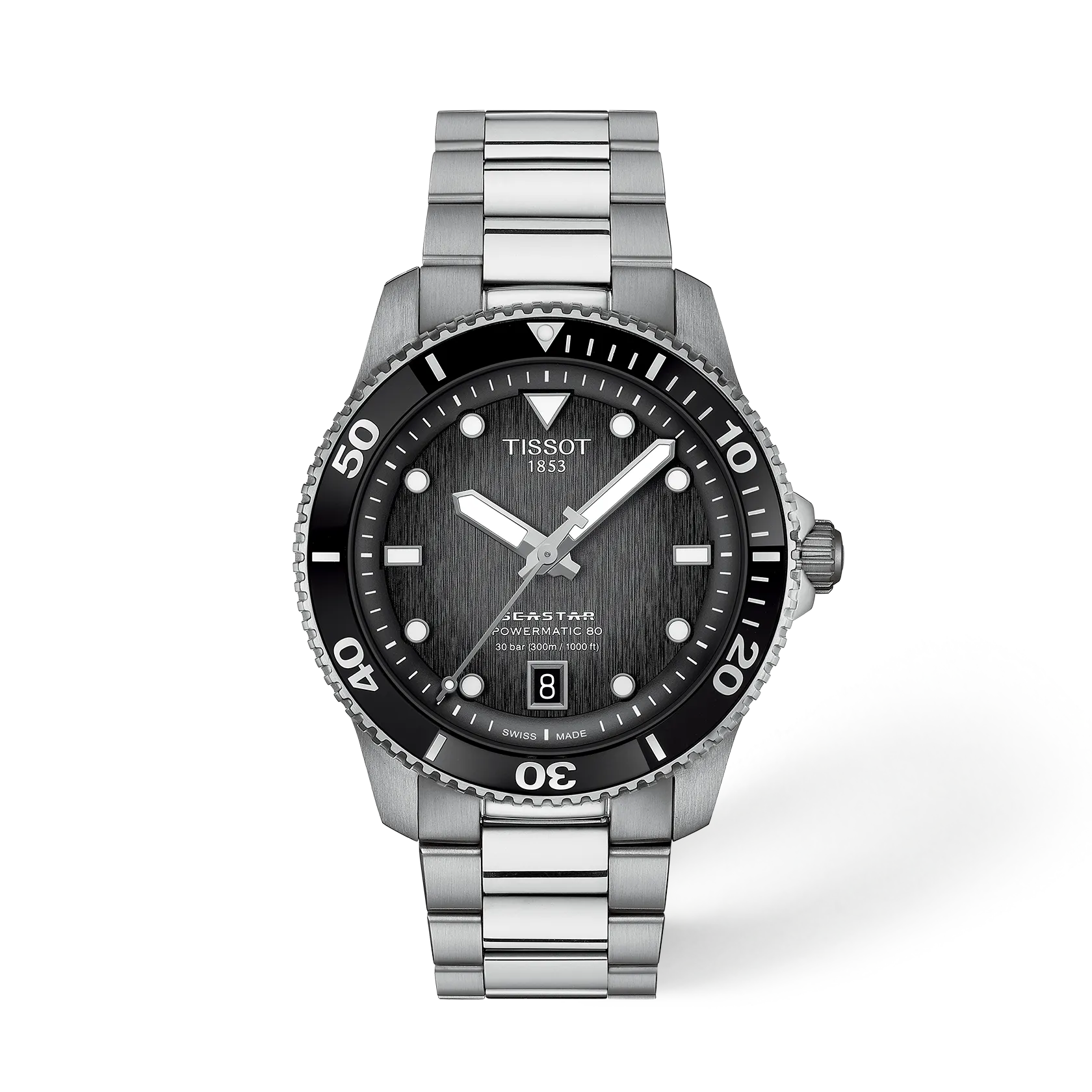
For a buyer who wants the simplest answer, the Tissot is difficult to ignore. This exact Seastar 1000 combines a black dial and 40 mm case with 300 metres of water resistance. Its automatic movement carries an 80-hour power reserve, the longest figure among these four watches.
The official UK price recorded for the T120.807.11.051.00 was £685. On the supplied specifications, that is a persuasive combination: compact dimensions, substantial water resistance and enough reserve to sit unworn for several days. It does not need to be presented as a bargain version of something more prestigious. It has a clear place of its own.
There are still reasons to choose differently. The SPB453J1 has a stronger heritage-led identity for a Seiko enthusiast. The Longines adds a GMT function and moves into a more premium bracket. The SRPE93 offers a larger, more overtly utilitarian alternative for less money. But for someone entering the category without a fixed brand preference, the Tissot is the most natural starting recommendation.
Longines HydroConquest GMT L3.790.4.06.6
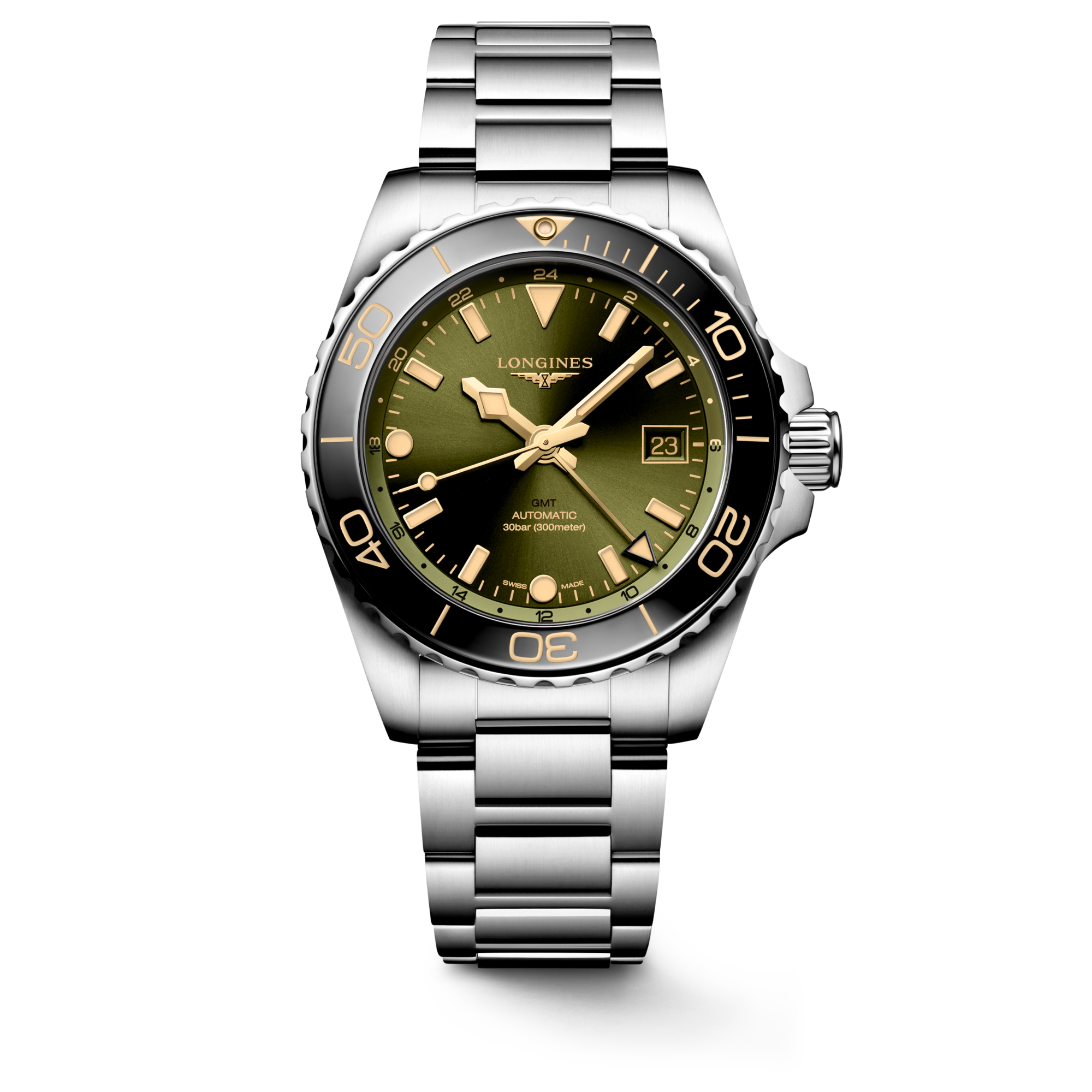
The Longines changes the character of the comparison. Its 41 mm case remains restrained for a modern sports watch, but the sunray green dial and steel bracelet give it a noticeably different presence from the black-dial watches around it. It also adds a GMT function, making it the obvious candidate for a buyer who wants to follow another time zone.
The HydroConquest GMT retains 300 metres of water resistance and uses the Longines calibre L844 with a stated reserve of up to 72 hours. Those figures keep it firmly within the practical side of the category rather than turning it into a travel watch that merely borrows dive-watch styling.
Its recorded official US price was $3,350, so this is not a direct substitute for the Tissot or SRPE93. It is the step-up option for someone who has already decided that the additional time-zone display, green dial and Longines name are worth the larger commitment. A first dive watch does not have to be an entry-level purchase, but the premium should buy something the owner actively wants rather than a vague promise of superiority.
Seiko Prospex Sea SRPE93
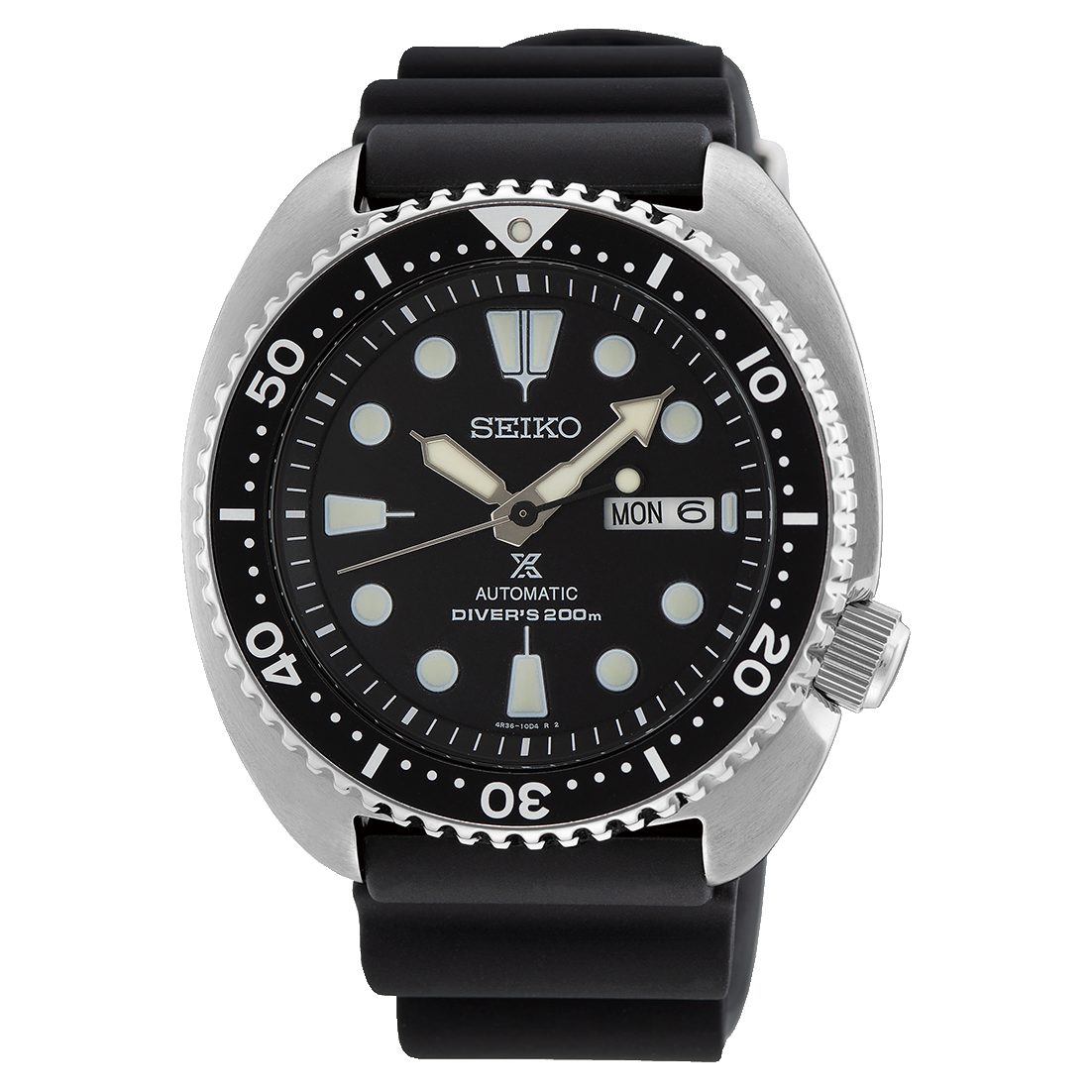
The SRPE93 is the unapologetically large watch in the group. Its 45 mm case and silicone band set it apart before any other specification is considered. For a buyer who likes the presence and straightforward character of a substantial Seiko diver, that is a feature rather than a flaw. Anyone uncertain about watches of this size should treat it as the first question to answer.
Seiko specifies 200 metres of water resistance, the calibre 4R36 and an approximate 41-hour power reserve. Those numbers are less ambitious than the three-day reserves elsewhere in the guide, but they describe a different proposition: a practical automatic diver with an uncomplicated black dial and a strap intended to suit active use.
The recorded official US price was $525, making it the least expensive US-priced watch here and placing it far below the Longines. The SRPE93 makes most sense when its scale is part of the attraction. Buyers seeking compact proportions should move directly toward the Tissot or SPB453J1; buyers who want a large Seiko with a more tool-like stance may find the decision refreshingly simple.
Which one should you choose?
The Tissot Seastar 1000 is the best default answer. It offers a 40 mm case, 300 metres of water resistance and an 80-hour reserve at a recorded UK price below the SPB453J1. Nothing about that conclusion makes it universally better; it simply asks for the fewest compromises from someone who has not yet developed a strong preference.
Choose the SPB453J1 if compact proportions and Seiko’s heritage-led styling matter enough to justify the higher price. Choose the Longines if the GMT function, green dial and premium positioning are central to the appeal. Choose the SRPE93 if a 45 mm case and practical silicone band sound more attractive than intimidating.
It is also worth being honest about what does not matter. A first dive watch does not need the highest water-resistance figure in the shop, and a longer reserve will not rescue a watch that feels wrong on the wrist. Narrow the field by size and budget first. The remaining decision becomes much more personal—and much easier.
The sensible first step
If there is no firm brand loyalty or need for a GMT function, begin with the Tissot. It provides the clearest combination of manageable size, useful reserve, serious water resistance and accessible pricing in this group. The two Seikos then offer distinct alternatives at opposite ends of the size spectrum, while the Longines serves the buyer ready to spend more for its particular mix of travel function and design.
The right first dive watch should make someone want to wear it, not make them feel that they have completed a checklist. Decide how large the watch should feel, set a comfortable budget and choose the character that still appeals after the specifications have stopped being novel. That is a better foundation for a collection than chasing the watch with the most impressive numbers.
Stay ahead of the next release
Get Man of the Hour’s weekly watch briefing, including new releases, thoughtful guides and the stories worth your time. Join the newsletter and follow Man of the Hour for more.